Aluminum is the most abundant metal in the Earth’s crust, making up roughly 8% of its mass. Yet it took until the 19th century to produce it in metallic form.
The paradox is fascinating. The material is all around us, but it almost never appears as the metal we know. It is bound to other elements, oxygen above all, within ores and rocks.
Bauxite, the main ore used to produce aluminum, is the most iconic example. Often reddish from the iron oxides it contains, this rock is mined from the ground before being refined into alumina, then into aluminum metal.
So the image of an aluminum body rising out of the earth is very real, as long as you remember that several industrial steps separate the mined rock from the finished metal. Behind the smooth, precise surface of a contemporary object lies a geological story millions of years old, carried on by the work of people and machines.
A French story, from Les Baux-de-Provence to industrial metal
The history of aluminum owes a great deal to French research. In 1821, mineralogist and engineer Pierre Berthier analyzed a red ore found near Les Baux-de-Provence and identified how rich it was in alumina. The ore would later be named bauxite, after the Provençal village.
A few decades earlier, Antoine Lavoisier had helped advance the understanding of chemical substances, notably by studying earths and oxides. In 1807, British chemist Humphry Davy suspected that alumina contained a new metal and named it aluminum, without managing to isolate it.
In 1825, the Dane Hans Christian Ørsted obtained a first, impure form of the metal. Then, in 1854, Frenchman Henri Sainte-Claire Deville developed a process to produce it in a more controlled way.
Finally, in 1886, Frenchman Paul Héroult and American Charles Martin Hall independently developed the electrolytic process that made large-scale industrial production possible.
Aluminum is therefore not the invention of one man or one country. But France holds an essential place in its story: the discovery of bauxite in Provence, the work of Sainte-Claire Deville and Paul Héroult’s decisive contribution to the metal’s industrial revolution.
A material that stands the test of time: recycling aluminum
The story of aluminum doesn’t end when it is extracted. It continues throughout the life of the objects made from it.
One of its greatest strengths is that it can be recycled. In theory, aluminum is infinitely recyclable: it can be remelted and reused without losing its fundamental properties. Sorting and controlling the alloys still matter, to preserve the characteristics you are after.
Recycling it also brings a considerable energy saving: it takes up to 95% less energy than producing primary aluminum from ore.
That makes aluminum a particularly interesting material when thinking about the lifespan of objects and the use of resources. Rather than seeing matter as something consumed and then discarded, it can become part of a cycle in which it keeps its value and finds new uses.
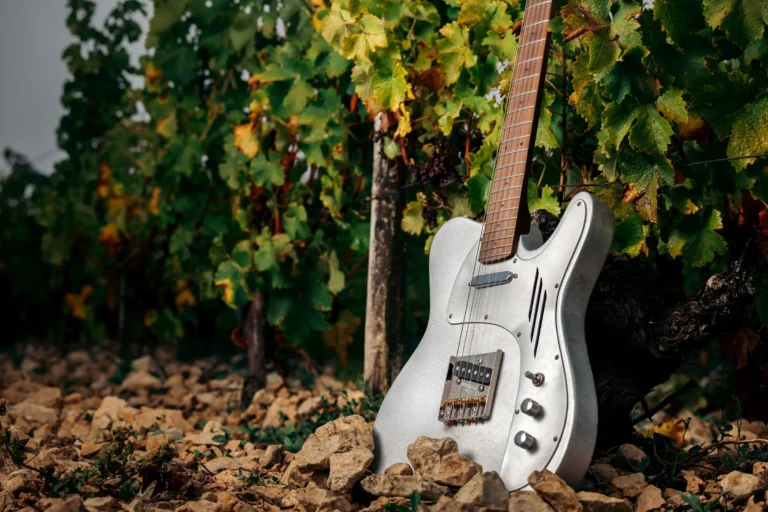
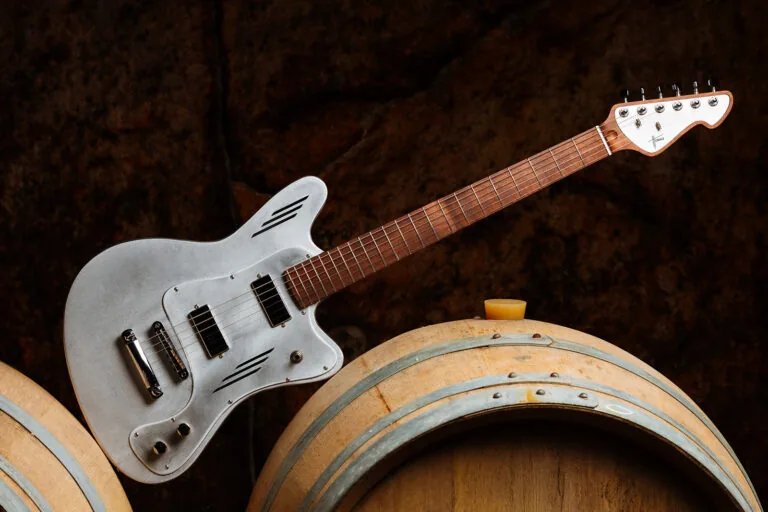
For TONALE, this thinking is part of our relationship with the material: understanding where it comes from, using its properties with precision and designing instruments whose quality makes them worth keeping and playing for many years.
A material only takes on its full meaning when you also consider what it will become after its first life.